 PlantProblem
Why Is My Fiddle Leaf Fig Dropping Leaves? (And How to Stop It)
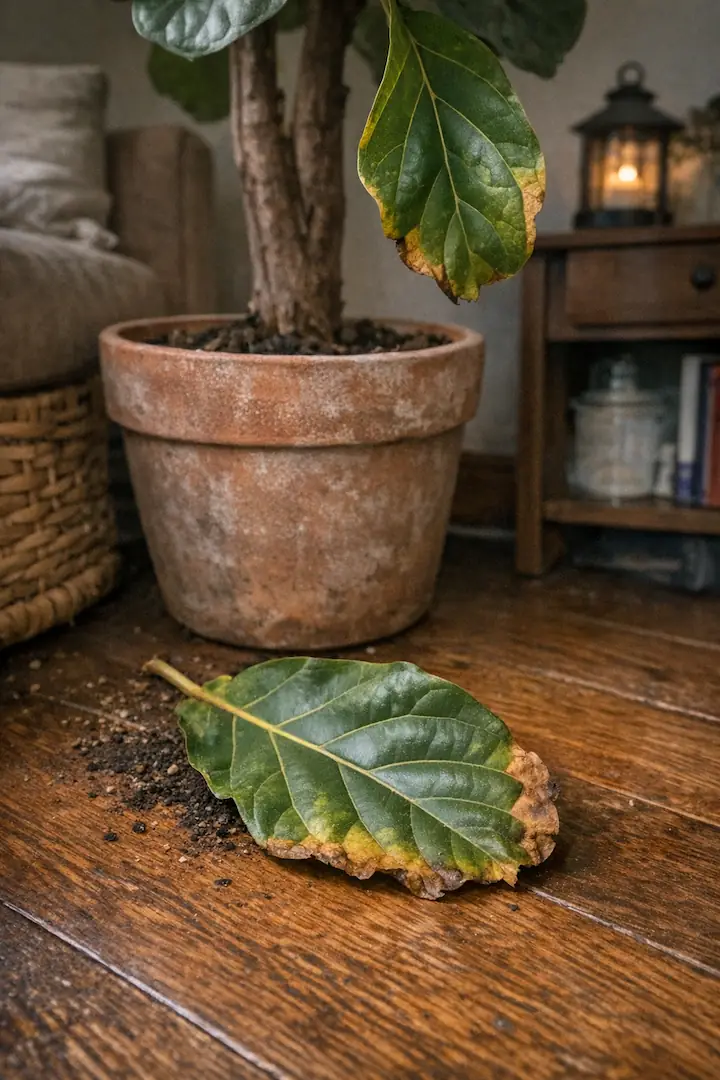
A fiddle leaf fig dropping leaves is not a death sentence. It's a response. The plant is shedding what it can't maintain given its current conditions.
The question is which condition changed. Because something always changed, even if you didn't change it intentionally.
| What you're seeing | Most likely reason |
|---|---|
| Leaves dropping after moving or buying the plant | Transplant and relocation shock |
| Lower leaves dropping one at a time | Normal aging or inconsistent watering |
| Many leaves dropping at once | Root rot or severe overwatering |
| Leaves dropping in fall and winter | Seasonal adjustment to lower light |
| New leaves dropping before they fully open | Cold draft or temperature stress |
| Dropping with brown spots on remaining leaves | Bacterial infection or root damage |
You Moved It
This is the single most common cause and the one most people don't expect.
Fiddle leaf figs are unusually sensitive to relocation. Moving the plant from one side of the room to the other is enough to trigger leaf drop. Moving it to a different room, or bringing it home from a nursery, can cause it to shed several leaves within the first two weeks.
The plant is not dying. It grew its leaves calibrated to a specific light direction and intensity. When that changes, it sheds the leaves that no longer make energetic sense and grows new ones suited to the new position.
The fix is to stop moving it. Put it in the best spot you can find near a bright window with indirect light and leave it there. Every time you move it the clock resets. New leaves will appear within four to six weeks once it stabilizes.
Overwatering and Root Rot
Multiple leaves dropping in a short period almost always points to a root problem.
Roots that have been sitting in wet soil lose function. When they can no longer transport water and nutrients up through the plant, the fiddle leaf fig sheds leaves to reduce the demand on a compromised system. The lower and older leaves go first but if the root damage is severe enough the whole plant starts dropping.
Pull it out of the pot. Healthy roots are white or light tan and firm. Damaged roots are brown, dark, and soft. Cut off everything that isn't firm and white, let the roots air out for an hour, then repot into fresh soil in a pot with drainage holes. A moisture meter before every watering prevents this from happening again. The top three centimeters of soil should be dry before adding more water.
Relocation Shock After Purchase
Buying a new fiddle leaf fig and watching it drop leaves within the first month is so common it has its own name among plant people.
Nurseries grow these plants in controlled greenhouse conditions with precise humidity, temperature, and light. Your home has none of that. The plant arrives stressed from transport and then immediately faces a completely different environment. Dropping leaves in the first few weeks is the plant recalibrating, not failing.
Put it near your brightest window, water it once when the top few centimeters of soil dry out, and do not fertilize for the first two months. Do not move it again. Most fiddle leaf figs stabilize and produce new growth by week six if left alone.
Seasonal Light Drop
Between October and February, day length shortens noticeably.
A fiddle leaf fig that was doing fine all summer may start dropping a leaf every couple of weeks in fall without anything else changing. The plant is responding to less available light by reducing the number of leaves it needs to maintain. This is not a crisis. It's seasonal biology.
If the dropping is gradual and the remaining leaves look healthy, wait it out. Move the plant closer to the window to compensate for the reduced light hours. A grow light running 10 to 12 hours a day during winter months keeps the plant stable and sometimes eliminates seasonal drop entirely.
Cold Air and Drafts
Fiddle leaf figs drop leaves when they experience sudden cold or direct airflow.
The most common version of this: a plant sitting near a window that gets opened regularly in cold weather, or within range of an air conditioning unit running in summer. The room temperature feels fine. The plant is receiving intermittent blasts of cold air at the leaf level and responding by shedding.
New leaves at the top of the plant dropping before they fully open is a specific signal for this. It's the newest, softest growth that reacts first to temperature stress. Check everything within one meter of the plant and eliminate any source of direct airflow.
Bacterial Infection
Leaf drop combined with brown spots that have a yellow halo is bacterial infection until proven otherwise.
The bacteria spread through the vascular system of the plant. Once established, affected leaves yellow, develop irregular brown patches, and drop. It moves upward through the plant if nothing is done.
Remove every leaf showing symptoms immediately. Use clean scissors and disinfect between each cut. Reduce watering, improve airflow around the plant, and do not mist. There is no effective spray treatment once the infection is inside the tissue. Removal of affected material and improving conditions to prevent spread is the only approach that consistently works.
What To Do Right Now
- If you moved the plant recently, move it back or commit to the new location and stop touching it for six weeks
- Pull it out of the pot if multiple leaves are dropping at once. Check the roots before assuming any other cause
- Count how many leaves are dropping per week. One every few weeks in winter is seasonal. Three or more in a week means something acute is happening
- Check what's within one meter of the plant for drafts, vents, or cold windows
- Do not fertilize a stressed plant that is actively dropping leaves. It cannot use nutrients it can't absorb and excess salts in the soil make things worse
Keep reading
// Newsletter
New plant problem? We'll email you the fix.
No spam. One email when we publish something useful.
No spam. Unsubscribe any time.