 PlantProblem
Monstera Watering: The Only Guide You Need
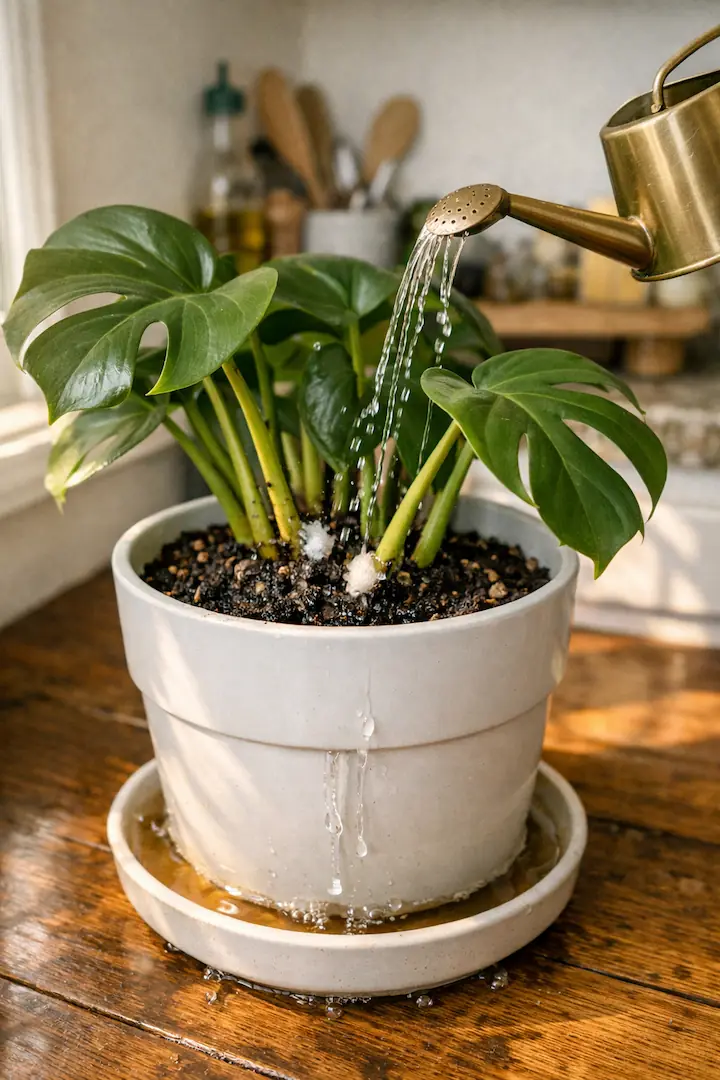
A monstera can go two weeks without water and look completely fine. The same plant, watered every five days, develops root rot in a month.
The problem is not that people don't know how to water. It's that monsteras look thirsty when they're not, and look fine when they're about to crash.
| What you're seeing | What it means |
|---|---|
| Leaves slightly droopy, soil dry | Needs water. Do it now. |
| Leaves droopy, soil still damp | Overwatered. Stop completely. |
| Yellowing lower leaves, wet soil | Root rot risk. Check the roots. |
| Crispy leaf edges, dry soil | Underwatered or low humidity. |
| Pot feels light when you lift it | Time to water. |
| Pot still feels heavy | Not yet. Check again in 3 days. |
Forget the Finger Test for Monsteras
The two-inch finger test works for pothos. Monsteras are a different situation.
A mature monstera lives in a large pot. Large pots hold a lot of soil. The top two inches can feel completely dry while the bottom half of the pot is still wet — and that bottom half is exactly where the roots are.
The most reliable method for monsteras is the pot weight test. Lift the pot right after watering and remember how it feels. Lift it again three days later. When it feels noticeably lighter — closer to empty than to just-watered — the soil is dry enough. Water then.
A moisture meter inserted all the way to the bottom of the pot is the other option. It reads conditions at root level, not at the surface. Either method is more accurate than the finger test for a plant this size.
How to Water It Correctly
Water slowly and completely. Pour until water drains freely from the bottom, then stop.
The goal is to saturate the entire root zone, not just the top layer. Partial watering keeps deep roots dry while keeping surface roots perpetually damp which is the opposite of what a monstera needs.
After watering, wait until the pot is significantly lighter before you water again. In a warm room with good indirect light, that usually means every 10 to 14 days in summer, every 18 to 25 days in winter. Those numbers shift depending on pot size, soil type, and light. Treat them as a starting point, not a rule.
Aroid Mix Changes Everything
Most monsteras sold in garden centers come in standard potting soil. Many owners repot them into aroid mix which is a chunkier blend with perlite, bark, and sometimes charcoal. This is because it drains faster and mimics the plant's natural growing conditions.
If your monstera is in aroid mix, the drying timeline is completely different. Aroid mix can dry out in five to seven days in summer instead of ten to fourteen. The pot weight test still works, but you'll need to check more frequently.
Standard potting soil retains moisture longer. Neither is wrong, but watering the same plant on the same schedule after switching soil types is a reliable way to either underwater or overwater it.
What to Do With Aerial Roots
Leave them alone.
Aerial roots are not a watering signal. They grow toward moisture in the air and help the plant climb in the wild. In your home, they do very little. You can tuck them into the soil if they bother you. They'll absorb water from there, but misting them, submerging them in water bowls, or worrying about them is unnecessary.
The one thing to avoid: cutting them off repeatedly. They'll keep growing back, and the repetitive cutting stresses the plant for no real benefit.
What To Do Right Now
- Lift your monstera's pot. If it still feels heavy, don't water it today regardless of when you last did
- Check what soil it's in. If it's chunky aroid mix, your drying timeline is faster than standard potting soil
- If leaves are droopy and the soil is wet, stop watering and check the roots before doing anything else
- Aerial roots growing out of the stem are normal. They don't need water and don't mean anything is wrong
// Newsletter
New plant problem? We'll email you the fix.
No spam. One email when we publish something useful.
No spam. Unsubscribe any time.