 PlantProblem
Why Doesn't My Monstera Have Holes?
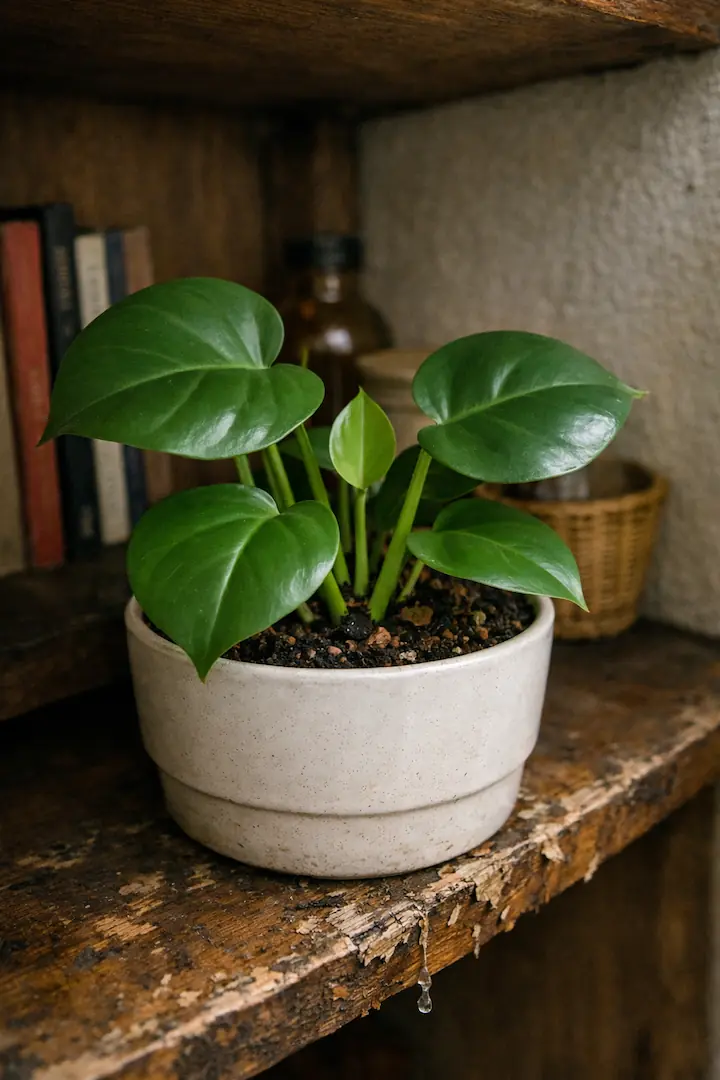
Your monstera has been alive for two years and still looks like a regular leaf plant. No splits. No holes. Nothing.
It's not broken. But something is off, and waiting longer without changing anything will give you the same result.
| What you're seeing | Most likely reason |
|---|---|
| Plant is under 2–3 years old, small leaves | Too young. Normal. |
| Large leaves, near a window, still no holes | Not enough light. |
| Leaves stay small even as plant ages | Light is the problem. |
| New leaves come out already split | Light and maturity are good. |
| Leaves have slits on edges but no interior holes | Early fenestration. Getting there. |
| Plant never grows new leaves | Wrong conditions overall. |
Your Monstera Might Just Be Young
Monsteras do not produce fenestrated leaves when they're juveniles. It's not a care problem. It's biology.
In the wild, young monsteras grow along the forest floor where light is scarce. Small, solid leaves are more efficient at that stage. Once the plant climbs upward and reaches brighter light, fenestrations develop to let light pass through to lower leaves.
In your home, the same logic applies. A monstera under two to three years old with leaves smaller than thirty centimeters will almost never have holes yet. The plant is not failing. It's just not there yet.
If your plant is young, the only thing to do is grow it faster — which brings us to the actual problem most people have.
Not Enough Light Is the Real Culprit
This is the cause for the majority of adult monsteras that never fenestrate.
A monstera in a dim corner or more than 1.5 meters from a window will grow leaves indefinitely without developing holes. The plant survives. It just stays juvenile in its leaf structure because it never gets the signal to do otherwise.
Bright indirect light triggers fenestration. That means within 1-1.5 meters of a window that gets several hours of natural light per day. Not a north-facing wall. Not across the room from a window.
If moving the plant isn't an option, a grow light placed thirty to forty centimeters above the canopy for twelve hours a day solves this completely. Results show up in new growth, not existing leaves — so expect four to eight weeks before you see the difference.
What Fertilizer Has to Do With It
A plant that's nutrient-deficient grows slowly and produces smaller leaves. Smaller leaves fenestrate later, if ever.
Monsteras are heavy feeders during spring and summer. If yours hasn't been fertilized in over six months, that's a contributing factor. A balanced liquid fertilizer applied once a month from March through September is enough.
A balanced fertilizer at half the recommended dose every two weeks during growing season works better than full dose once a month. More frequent, smaller doses is how plants actually absorb nutrients.
One Thing Worth Checking
Some plants sold as monsteras are not Monstera deliciosa. Rhaphidophora tetrasperma gets called "mini monstera" constantly at garden centers. It does fenestrate, but differently — smaller leaves with fewer splits, more resembling a philodendron than a true monstera.
If your plant's leaves are staying small regardless of age and light, look up both species and compare the leaf shape. It changes nothing about the care, but it explains why the fenestration looks different from what you expected.
What To Do Right Now
- Measure how far your plant is from the nearest window. If it's more than one and a half meters, move it closer before anything else
- Check the age and current leaf size. Under thirty centimeters and under two years old means the plant needs time, not intervention
- If light is adequate and the plant is mature, start fertilizing monthly and wait for new growth
- New leaves are where fenestration appears first. Old solid leaves will not develop holes retroactively
Keep reading
// Newsletter
New plant problem? We'll email you the fix.
No spam. One email when we publish something useful.
No spam. Unsubscribe any time.