 PlantProblem
Monstera Yellow Leaves: Which of These 5 Causes Is Yours?
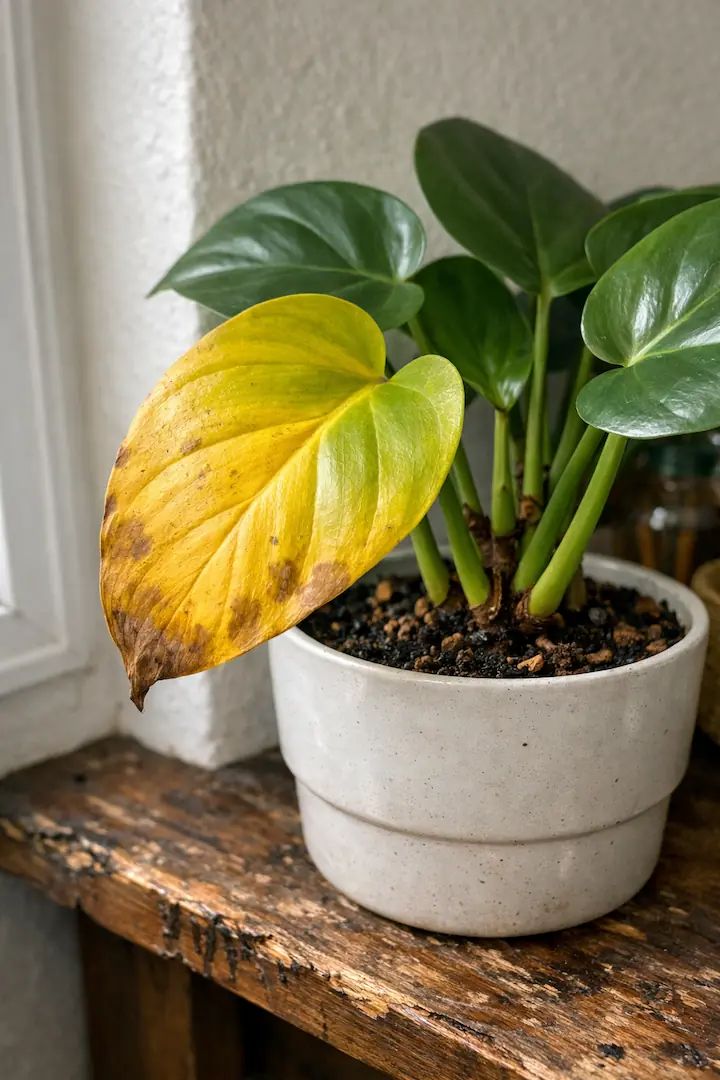
A monstera with yellow leaves is not necessarily a sick monstera. One of the five causes below is completely normal and requires nothing from you. The other four need attention. The key is figuring out which one you're dealing with before you do something that makes it worse.
| What you're seeing | Most likely cause |
|---|---|
| Yellow leaves + wet soil | Overwatering |
| Yellow leaves + small new growth | Not enough light |
| Older lower leaves yellowing one at a time | Natural aging. Normal. |
| No yellow leaves in years, now several at once | Nutrient deficiency |
| Yellowing + roots coming out the pot | Root bound |
Overwatering
This is the most common cause by a significant margin.
Monstera roots need oxygen as much as they need water. Soil that stays wet for more than a week starves the roots of oxygen and starts breaking them down. Damaged roots can't deliver nutrients to the leaves. The leaves turn yellow as a result.
The pattern: yellowing starts on lower leaves, the soil feels damp days after watering, and the plant looks generally unhappy rather than just producing the occasional yellow leaf.
Let the top two inches of soil dry out completely before watering again. If you're not sure whether the soil is dry enough, a moisture meter reads moisture at root level rather than just at the surface. That distinction matters more than most people realize.
Not Enough Light
Monstera needs more light than most people give it.
It tolerates medium indirect light. It does not stay green in low light for long. Without adequate light, the plant can't produce enough chlorophyll to maintain its leaves, and the oldest ones start going yellow first.
The sign that separates this from overwatering: the soil dries out quickly, the plant looks stretched or the new leaves are coming in smaller than expected, and the yellowing is gradual rather than sudden.
Move it closer to a bright window. Two to three meters from a south or east-facing window is the target. Direct afternoon sun will burn the leaves, so filtered light or morning sun is ideal.
Natural Aging
Every monstera leaf has a lifespan.
The oldest leaves, usually at the base of the plant, will eventually yellow and die regardless of how well you care for the plant. This is normal. It's how the plant redirects energy toward new growth.
The way to identify this: only one or two of the lowest, oldest leaves are affected, the rest of the plant looks healthy, and new leaves are still appearing regularly. If that's what you're seeing, remove the yellow leaves cleanly at the stem and move on.
Nutrient Deficiency
Potting mix doesn't last forever.
After six to twelve months of regular watering, the nutrients in the soil get flushed out. Nitrogen is the one most directly responsible for keeping leaves green. Without it, the plant starts losing color across multiple leaves at once rather than just the oldest ones.
If your monstera has been in the same soil for more than a year without fertilizing, this is likely the cause. A balanced liquid fertilizer once a month from spring through summer is enough to correct it. Cut it out entirely in fall and winter when the plant isn't actively growing.
Root Bound
A monstera that has outgrown its pot can't function efficiently.
The roots circle the container, compress, and lose their ability to absorb water and nutrients properly. The leaves reflect that stress by turning yellow. Check by looking at the drainage holes. If roots are growing out of them, or if you pull the plant out and see a solid mass of roots with almost no visible soil, it needs a bigger pot.
Go up one size. A pot two to three inches wider in diameter gives the roots room to expand without creating excess soil that holds too much water.
What To Do Right Now
- Push your finger two inches into the soil. If it's damp, overwatering is the most likely cause and the fix is simply to wait
- Look at which leaves are yellowing. If it's only the oldest lowest leaves and the rest of the plant is healthy, nothing is wrong
- Check when you last fertilized. If it's been more than a year, start a monthly feeding schedule this spring
- Pull the plant out of its pot if you haven't in a while. Roots filling the entire container explain a lot of unexplained yellowing
Keep reading
// Newsletter
New plant problem? We'll email you the fix.
No spam. One email when we publish something useful.
No spam. Unsubscribe any time.