 PlantProblem
Peace Lily Not Blooming? Here's What It Actually Needs
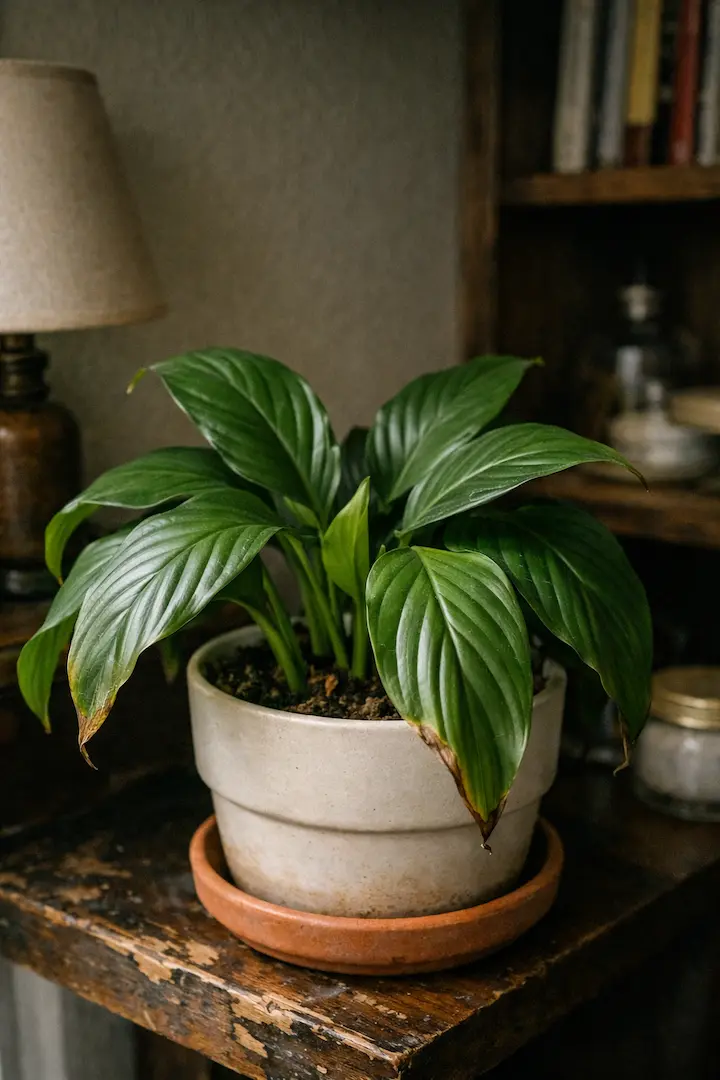
A peace lily that refuses to bloom has its reasons. The plant isn't broken. It's responding to its environment exactly as it should. The problem is that its environment isn't giving it what it needs to flower.
Most people change three things at once and can't tell what worked. This is how to narrow it down to the actual cause.
| What you're seeing | Most likely reason |
|---|---|
| No blooms in over a year, plant otherwise healthy | Not enough light |
| Bloomed before, stopped after moving to a new spot | Light or temperature change |
| New leaves constantly, zero flowers | Too much nitrogen in the fertilizer |
| Plant is small and young, never bloomed | Not mature enough yet |
| Blooms appear but drop quickly | Low humidity or inconsistent watering |
| No blooms despite bright light | Needs a cold period to trigger flowering |
Not Enough Light
Peace lilies are marketed as low-light plants. That's true for survival. It's not true for flowering.
Blooming requires energy. Energy requires light. A peace lily sitting three meters from the nearest window in a dim corner will stay alive indefinitely and never produce a single flower. The same plant moved to one meter from a bright window that gets indirect light for most of the day will usually bloom within eight to twelve weeks.
Direct sun burns the leaves. Indirect bright light is the target. An east-facing window with morning sun, or a spot near a north-facing window that gets ambient daylight, is usually enough. If natural light isn't an option, a grow light running 12 hours a day works just as well.
Too Much Nitrogen
Nitrogen is the nutrient responsible for leaf and stem growth. It's the first number in any NPK ratio.
When a peace lily gets too much of it, the plant puts all its energy into producing leaves. Big, dark green, healthy-looking leaves. And no flowers. If you've been fertilizing regularly with a general-purpose fertilizer and the plant looks lush but hasn't bloomed in months, this is likely the reason.
Switch to a fertilizer with a lower first number and a higher middle number — phosphorus is what supports flowering. A A bloom-focused fertilizer with something like a 5-30-5 ratio applied once a month from spring through summer shifts the plant's priorities. Stop fertilizing in fall and winter regardless of what you use.
It Needs a Temperature Drop
Peace lilies are tropical, but they use seasonal temperature changes as a cue to flower.
A brief period of cooler temperatures — around 16°C to 18°C for four to six weeks — signals the plant that conditions are changing and it should prepare to reproduce. This is why peace lilies in greenhouses are often treated with cooler temperatures or specific hormones before being sold already in bloom.
In a home, the easiest way to replicate this is to move the plant to a cooler room in late fall for a month. Not cold — below 13°C causes damage. Just noticeably cooler than its usual spot. After that period, move it back to its normal location with good light, and flowering usually follows within a few weeks.
The Plant Is Too Young
Peace lilies need to reach a certain maturity before they bloom.
If you bought a small plant and it's never flowered, it may simply not be old enough yet. Most peace lilies flower for the first time at one to two years old under good conditions. Small nursery plants are often sold very young.
There's nothing to fix here. Give it good light, stop over-fertilizing with nitrogen, and wait. The first bloom will come once the plant has enough mass to support it.
Inconsistent Watering
This one affects bloom quality more than bloom frequency, but it matters.
Peace lilies that go through cycles of drought and flooding produce flowers that open partially or drop early. The buds are forming during dry periods and don't have the resources to develop fully. Consistent moisture — never soggy, never bone dry — keeps the plant in a stable state where it can actually complete a bloom cycle.
The top inch of soil drying out between waterings is the right interval. In most homes that means every seven to ten days in summer. A moisture meter is more reliable than a schedule because it accounts for pot size, soil type, and seasonal changes automatically.
What To Do Right Now
- Move the plant to within one meter of a bright window with indirect light — this single change produces blooms more often than anything else
- Check your fertilizer's NPK ratio. If the first number is the highest, switch to something phosphorus-forward before the next feeding
- If the plant hasn't bloomed in over a year and light is already good, try four to six weeks in a slightly cooler room — around 16°C — then return it to its normal spot
- If the plant is under a year old and has never bloomed, it may simply need more time — focus on light and consistent watering and let it mature
Keep reading
// Newsletter
New plant problem? We'll email you the fix.
No spam. One email when we publish something useful.
No spam. Unsubscribe any time.