 PlantProblem
Peace Lily Yellow Leaves: What's Actually Causing It
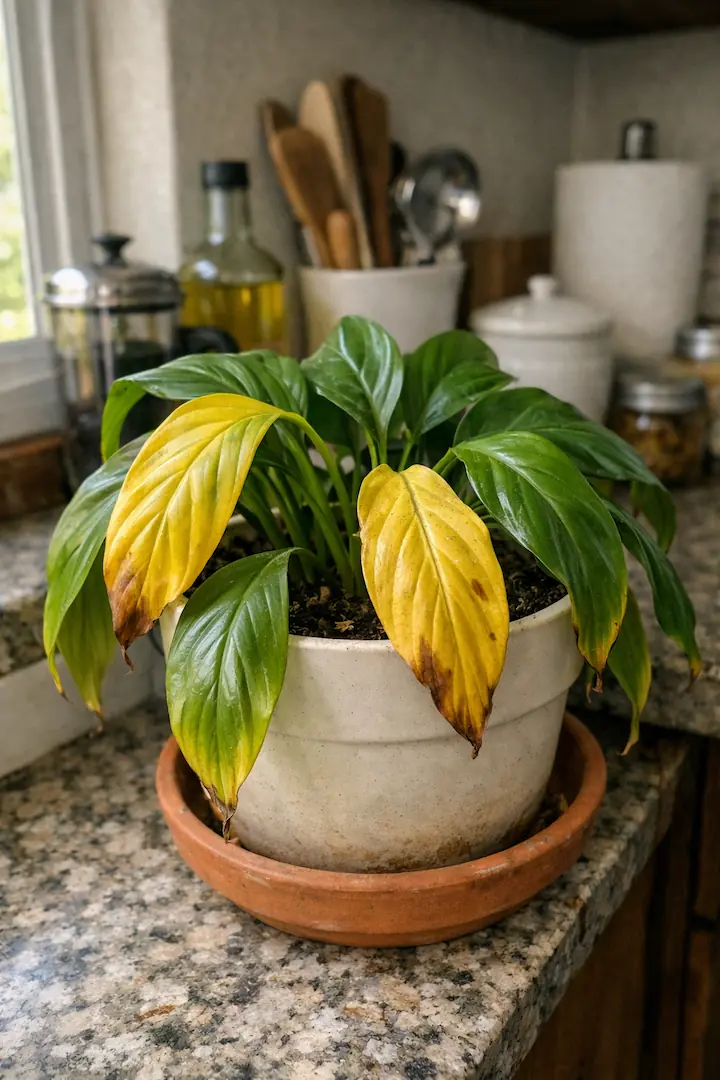
Yellow leaves on a peace lily are specific. The pattern of yellowing, where it starts, how fast it spreads, whether the leaf goes soft or stays firm — all of it points to a different cause. You don't need to guess if you know what to look for.
| What you're seeing | Most likely reason |
|---|---|
| Lower leaves yellowing one at a time | Natural aging, nothing wrong |
| Many leaves yellowing at once | Overwatering or root rot |
| Yellow leaves with wet, soft stems | Root rot, check immediately |
| Yellowing starting at the tips and edges | Low humidity or fluoride buildup |
| Pale yellow across the whole leaf | Not enough light |
| Yellow new leaves, dark old leaves | Iron deficiency or pH problem |
Overwatering
This is the most common cause by a significant margin.
Peace lilies like consistent moisture. They do not like wet feet. Soil that stays soggy for days after watering cuts off oxygen to the roots. The plant starts pulling resources from older leaves first, and those leaves turn yellow before anything else looks wrong.
The distinguishing sign: multiple leaves yellowing at the same time, not one at a time over weeks. Press the soil. If it's still wet from the last watering, that's the problem.
Let the soil dry out to about two centimeters deep before watering again. If the pot has no drainage hole, that's the first thing to fix. Roots sitting in water at the bottom of a pot with no exit will rot regardless of how carefully you water from the top.
Natural Aging
One yellow leaf every few weeks on an otherwise healthy plant is not a problem.
Peace lilies shed their oldest leaves continuously as they produce new ones. The lower leaves go first. They yellow gradually, stay firm, and come off cleanly when you remove them. No intervention needed beyond pulling the leaf off once it's fully yellow.
The way to tell this from overwatering: one leaf at a time, the rest of the plant looks healthy, and new growth is actively appearing at the center.
Not Enough Light
A peace lily in low light survives. It doesn't thrive.
When light drops below what the plant needs for active photosynthesis, it starts economizing. Older leaves lose their chlorophyll first because the plant reallocates what little energy it produces toward newer growth. The result is a general pale yellowing across the older leaves rather than crispy edges or soft collapse.
Move it to within one meter of a window that receives indirect light for most of the day. North-facing windows with no direct sun often aren't enough for good color. If the plant perks up and new leaves come in darker green within a few weeks, light was the issue.
Fluoride and Tap Water
Peace lilies are sensitive to fluoride. More than most houseplants.
Fluoride accumulates in the soil with every watering. Once concentrations get high enough, the plant shows it at the leaf tips and edges first, which then spread inward and turn yellow before going brown. If you've been using tap water for months and the yellowing is starting at the margins rather than spreading uniformly across the leaf, this is likely what's happening.
Switch to filtered water or let tap water sit uncovered for 24 hours before using it. Flush the soil once with distilled water to clear the buildup. New growth after that should come in clean.
Root Rot
This is overwatering taken one step further.
When roots have been sitting in wet soil long enough, they begin to rot. A rotting root system can't deliver water or nutrients to the leaves, so multiple leaves yellow fast and the stems near the base may feel soft. This moves quicker than standard overwatering yellowing.
Pull the plant out of its pot. Healthy roots are white or light tan and firm. Rotten roots are brown or black, mushy, and may smell. Cut off everything rotten with clean scissors, let the roots air dry for an hour, then repot in fresh dry soil in a pot with drainage. A fungicide drench applied at repotting reduces the chance of the rot continuing in the new soil.
Iron Deficiency
This one is less common but worth knowing.
If the new leaves coming in at the center are yellow or pale while the older leaves stay darker green, the plant is likely iron deficient or dealing with a soil pH that's too high to absorb iron properly. Alkaline soil locks out iron even when it's present.
A liquid iron supplement applied once solves the deficiency directly. If the problem returns, check the pH of the soil with a simple test kit. Peace lilies prefer a pH between 5.8 and 6.5. Above that, nutrient absorption becomes unreliable regardless of what you add to the soil.
What To Do Right Now
- Press the soil before doing anything else. If it's wet, stop watering and let it dry completely before the next time
- Count how many leaves are yellowing. One at a time over weeks is aging. Several at once is a watering or root problem
- Pull the plant out of its pot if the stems near the base feel soft. Check the roots and cut off anything brown and mushy
- Switch to filtered water if you've been using tap water for more than three months without flushing the soil
- Move the plant closer to a window if the yellowing is pale and uniform across the whole leaf rather than starting at the edges
Keep reading
// Newsletter
New plant problem? We'll email you the fix.
No spam. One email when we publish something useful.
No spam. Unsubscribe any time.