 PlantProblem
Pothos Root Rot: How to Save a Plant That's Already Half Dead
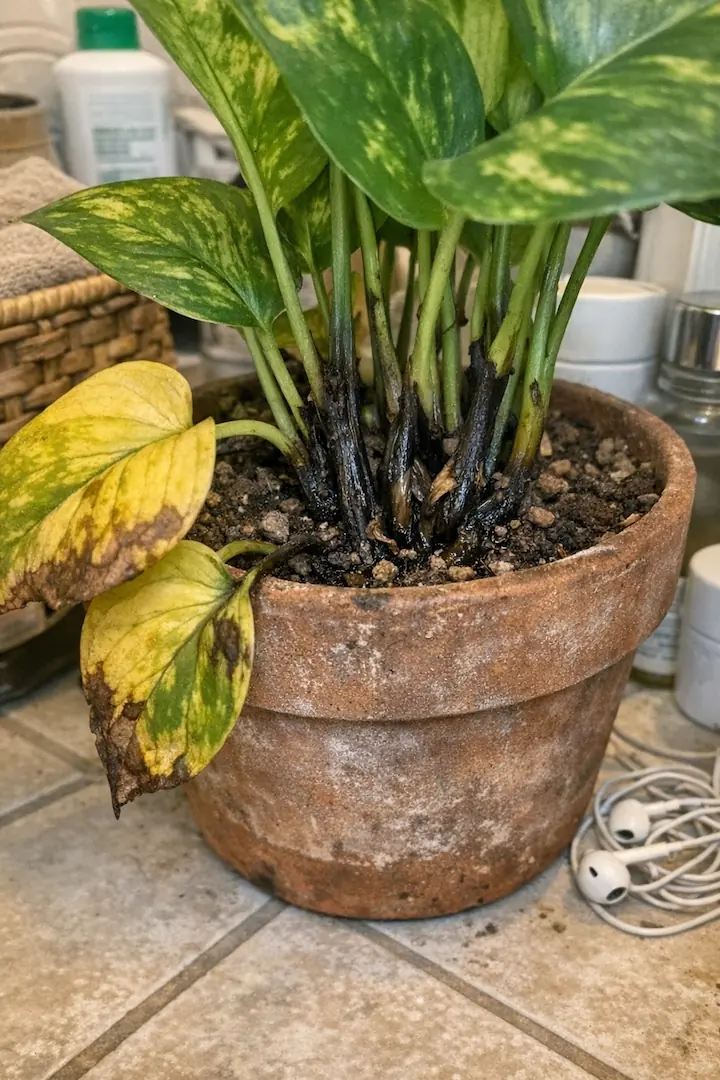
Root rot doesn't look like an emergency until it is one. The plant wilts, a few leaves go yellow, the soil smells a bit off, easy to miss for weeks. By the time most people notice, the roots are already gone. The good news: pothos are resilient. If there are any healthy roots left, the plant can recover. Here's how to find out and what to do about it.
| Sign | What it means |
|---|---|
| Soil wet for more than 10 days | Root rot is likely developing |
| Yellowing lower leaves + wet soil | Root rot in early stage |
| Wilting despite wet soil | Roots can't absorb water, advanced rot |
| Black or brown mushy stems at the base | Severe rot, act immediately |
| Soil smells sour or like decay | Active rot confirmed |
| Roots are brown, soft, and fall apart | Rot is established |
How to Know for Sure
The only way to confirm root rot is to look at the roots. Take the plant out of its pot.
Healthy roots are white or light tan, firm, and hold their shape when you touch them. Rotting roots are brown or black, mushy, and fall apart when you handle them. The difference is obvious.
If the roots smell like decay or the base of the stems is soft and dark, you have root rot. If the roots are mostly white with a few brown tips, you caught it early.
How to Save It. Step by Step
Work quickly. The longer rotting roots stay in contact with healthy ones, the more the rot spreads.
- Take the plant out of its pot completely
- Shake off as much soil as possible, don't worry about damaging the roots at this point
- Rinse the roots under lukewarm water to see clearly what you're working with
- Cut off every brown, black, or mushy root with clean scissors, if it's soft, it goes
- If more than 70% of the roots are gone, cut back some of the stems too, the plant can't support that much foliage without roots
- Let the remaining roots air dry for 30-60 minutes
- Treat with a diluted fungicide if you have one, not essential, but it reduces the chance of reinfection
- Repot in fresh, dry soil in a clean pot with drainage holes
A pot with drainage holes is non-negotiable after root rot. The cause is almost always a pot that traps water, fixing the soil without fixing the pot means you'll be doing this again in three months.
Why Root Rot Happens
The mechanism is simple. Soil that stays wet too long becomes anaerobic, it runs out of oxygen. Roots need oxygen to function. Without it, they die and decompose in place. That decomposition is what you smell.
The direct cause is almost always one of three things: watering too often, a pot with no drainage, or soil that's too dense and holds water longer than it should. Standard potting mix compacts over time and holds more water than pothos can tolerate.
What Soil to Use After Repotting
Regular potting mix is fine as a base, but it benefits from amendment. Mix in perlite at roughly a 3:1 ratio, three parts potting mix to one part perlite. Perlite is just volcanic glass that creates air pockets in the soil and prevents compaction. It's cheap and makes a measurable difference in how quickly soil dries.
Don't reuse the old soil. It contains the fungal spores that caused the rot.
What to Expect After Repotting
The plant will look rough for one to three weeks. Some leaves will continue to yellow and drop, that's normal. The plant is reallocating energy to growing new roots, not maintaining foliage.
Don't water again until the soil is completely dry two inches down. The plant doesn't need water right now — it needs oxygen at the roots and time.
New growth is the sign that recovery is working. Once you see a new leaf unfurling, the root system is reestablishing and the plant is out of danger.
What To Do Right Now
- Pull the plant out and look at the roots, this is the only way to know what you're dealing with
- Cut everything that's brown, soft, or mushy, being too conservative here is how people lose the plant
- Repot in fresh soil with perlite in a pot that has drainage holes
- Don't water for at least a week after repotting, regardless of how the soil looks
// Newsletter
New plant problem? We'll email you the fix.
No spam. One email when we publish something useful.
No spam. Unsubscribe any time.