 PlantProblem
Pothos Watering Guide: How Often, How Much, and How to Stop Killing It
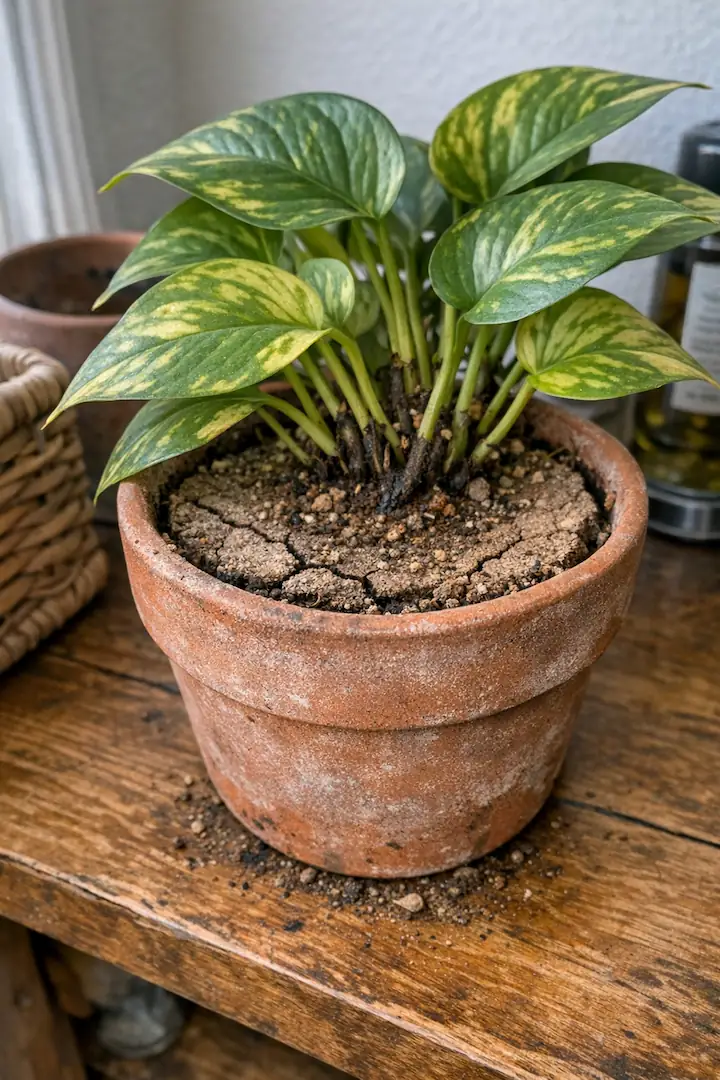
Most pothos die from too much water, not too little. The plant looks droopy, someone waters it, it looks worse, they water it again. The cycle ends with root rot and a dead plant. Watering pothos correctly is less about technique and more about timing. Here's what actually matters.
| Situation | What to do |
|---|---|
| Soil dry 2 inches down | Water thoroughly |
| Soil still damp | Wait. Check again in 2-3 days |
| Leaves slightly droopy + dry soil | Water immediately |
| Leaves droopy + wet soil | Stop watering. Check for root rot |
| Winter, low light | Water half as often as summer |
| Recently repotted | Wait 1 week before first watering |
The Only Rule That Matters
Forget schedules. Water when the soil is dry, not when the calendar says to.
Push your finger two inches into the soil. If it feels damp at all, put the watering can down and check again in two or three days. If it feels dry, water until it drains out the bottom.
That's the entire framework. Everything else is detail.
How to Actually Water It
When you water, water completely. Pour slowly until water runs freely out the drainage holes. This does two things: it saturates the entire root zone, and it flushes out mineral buildup from tap water.
Then stop. Don't water again until the soil is dry two inches down.
The mistake most people make is watering a little bit every few days. Shallow watering keeps the top layer of soil perpetually damp while the bottom stays dry. Roots grow toward moisture. Shallow watering trains them to stay near the surface, which makes the plant more vulnerable to drying out and less stable overall.
How Often Is That in Practice
In a warm room with moderate indirect light, most pothos need water every 7 to 10 days in spring and summer. Every 14 to 21 days in fall and winter.
Those numbers are a starting point. They shift based on pot size, soil type, humidity, and light. A pothos in a small terracotta pot in a bright window might need water every 5 days. The same plant in a large plastic pot in a dim corner might go 3 weeks.
The soil is always more accurate than any schedule.
What Affects How Fast the Soil Dries
Four things determine how quickly your pothos soil dries out:
Pot material. Terracotta is porous and breathes, so soil dries faster. Plastic and ceramic retain moisture longer. Neither is wrong, but they require different watering frequencies.
Pot size. A large pot holds more soil and more water than the roots can absorb quickly. The excess sits and stagnates. Pothos do better slightly root-bound than in oversized pots.
Light. More light means more photosynthesis, more water consumption, faster drying. A pothos in low light barely drinks.
Season. Growth slows in winter. Water needs drop significantly. Keeping a summer watering schedule through winter is one of the most common ways people lose a healthy plant.
When a Moisture Meter Is Worth It
The finger test works fine. A moisture meter works better.
It reads moisture at root level, not just at the surface. This matters because soil can feel dry on top while staying wet three inches down, which is exactly where root rot starts. If you've killed a pothos before despite thinking you were watering correctly, a moisture meter often reveals the actual problem immediately.
What To Do Right Now
- Push your finger two inches into your pothos soil right now. If it's damp, don't water it today regardless of when you last did
- Check what pot material and size you're using. If it's a large plastic pot with no drainage, that's likely your problem
- If you're in fall or winter, cut your current watering frequency in half and see how the plant responds
- If the leaves are droopy and the soil is wet, stop watering entirely and read the root rot article
Keep reading
// Newsletter
New plant problem? We'll email you the fix.
No spam. One email when we publish something useful.
No spam. Unsubscribe any time.