 PlantProblem
Snake Plant Brown Tips: What's Actually Causing It
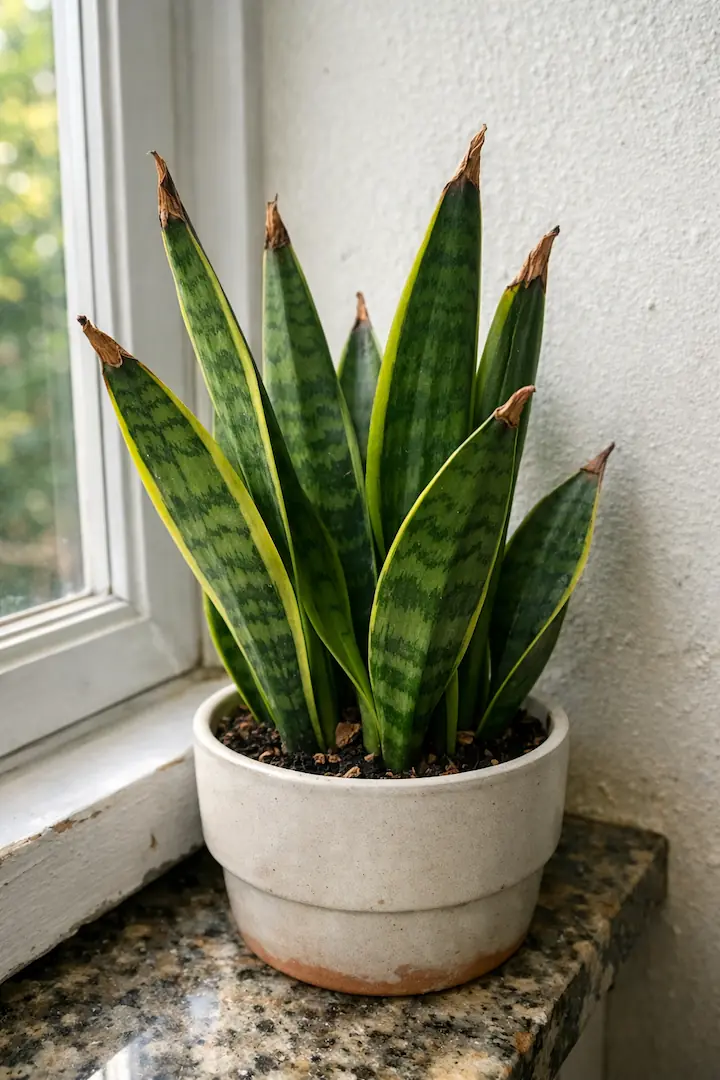
Brown tips on a snake plant are almost always preventable. Not because the plant is delicate. Because the cause is almost always the same three things, and all three are fixable in an afternoon.
The tips brown from the outside in. Once that tip is gone, it doesn't come back. But you can stop it from going further.
| What you're seeing | Most likely reason |
|---|---|
| Tips brown and crispy, rest of leaf healthy | Low humidity or fluoride in tap water |
| Brown tips plus soft, mushy base | Overwatering — check roots |
| Tips brown after being near a vent or window | Cold draft or direct hot air |
| Brown tips on new leaves only | Physical damage during handling |
| Tips brown, leaves also wrinkling | Underwatering — rare but possible |
| Brown spreading down the entire edge | Root damage from overwatering or repotting stress |
Tap Water
This is the cause most people never consider, and it's responsible for a large portion of brown tips in snake plants.
Municipal water contains fluoride and chlorine. Both accumulate in the soil over time. Snake plants are sensitive to fluoride specifically. When concentrations get high enough, the tips show it first.
The solution is simple: let tap water sit uncovered for 24 hours before using it. Chlorine evaporates. Or switch to filtered water or rainwater entirely. If you've been watering with tap water for months and the tips started recently, flush the soil thoroughly with distilled water once to clear the buildup.
Low Humidity
Snake plants tolerate dry air better than most houseplants. They still have a limit.
Below 30% humidity, leaf tips start to desiccate. The rest of the leaf looks perfectly fine. Only the very tip browns, and it stays dry and papery rather than soft.
This is most common in winter, when heating systems strip moisture from indoor air. A small humidifier placed within two meters of the plant is the straightforward solution. Grouping plants together also raises local humidity slightly. Misting doesn't work — it evaporates too fast to have a meaningful effect.
Overwatering
Snake plants store water in their leaves. They do not need frequent watering.
When the soil stays wet too long, the roots begin to suffocate. The plant responds by pulling resources away from the extremities first. The tips are the furthest point from the root system. They brown before anything else shows symptoms.
This kind of browning is different from tap water browning: the tips may be slightly soft rather than purely crispy, and you'll often notice the base of the leaves feels less firm than usual. Let the soil dry completely between waterings. In most homes, that means every three to four weeks in winter, every two weeks in summer. A moisture meter removes the guesswork entirely.
Cold Drafts and Heating Vents
Snake plants are comfortable between 15°C and 29°C.
The problem isn't usually room temperature. It's air movement. A plant sitting 30 centimeters from an air conditioning unit or a slightly open window in January is receiving cold air directly on its leaves for hours at a day, even if the rest of the room feels warm. The tips are the most exposed point and they show damage first.
Check what's within one meter of the plant. If there's a vent, a radiator, or a drafty window, move the plant away. The rest of the leaf almost never recovers the same way, but new growth comes in clean.
Physical Damage
This one gets overlooked because the cause happened days or weeks before the symptom appears.
Snake plant leaves are rigid. When a leaf tip gets brushed against a wall, bent during repotting, or knocked by something passing by, the damage shows up as browning a week or two later. The tip was already injured. The browning is just the visible result arriving late.
If this is the cause, it's localized to specific leaves and doesn't spread. No fix needed beyond repositioning the plant somewhere it won't get bumped.
What To Do Right Now
- Switch to filtered water or let tap water sit 24 hours before using it — if you haven't already, this single change stops the majority of tip browning
- Check the humidity in the room. Below 30% in winter is common and enough to cause this
- Feel the soil. If it's still damp from the last watering, hold off and let it dry completely before the next one
- Look at what's within one meter of the plant. Vents, windows, radiators — any of them can cause tip damage without the room feeling cold or hot overall
- Trim the existing brown tips with clean scissors at an angle to match the leaf shape. It doesn't help the plant, but it stops the browning from looking worse than it is
Keep reading
// Newsletter
New plant problem? We'll email you the fix.
No spam. One email when we publish something useful.
No spam. Unsubscribe any time.