 PlantProblem
Snake Plant Yellow Leaves: What's Actually Causing It
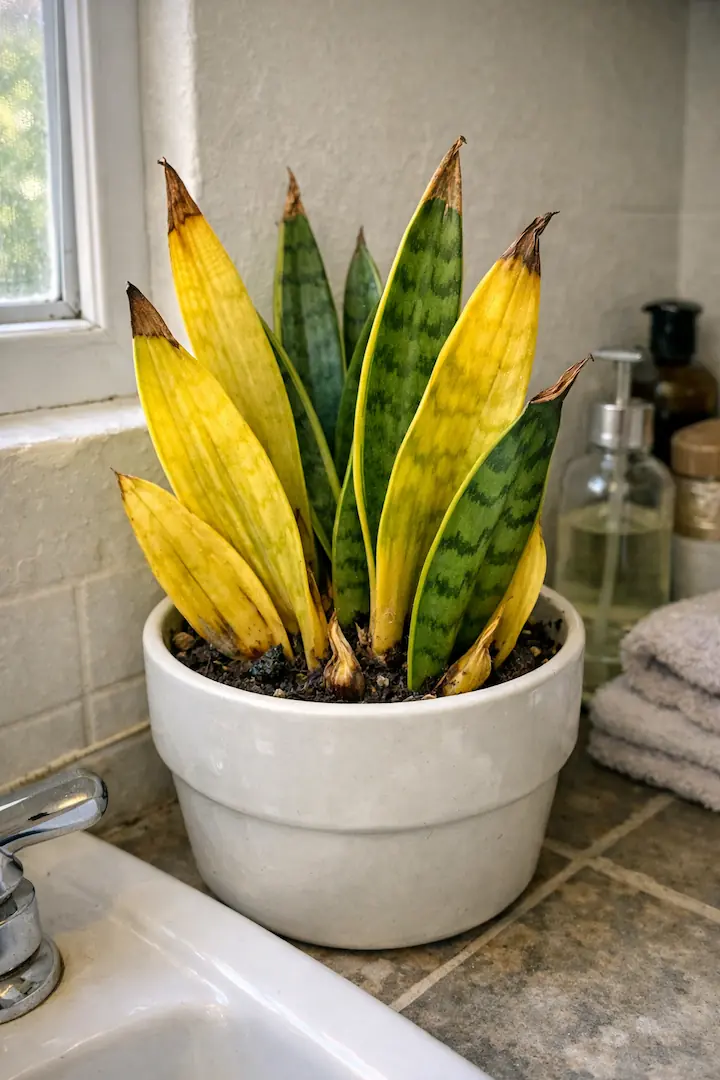
Yellow leaves on a snake plant get blamed on overwatering almost every time. Sometimes that's right. Often it's not.
The problem with assuming overwatering is that the fixes are completely different depending on the real cause. Water less when the problem is cold damage and the plant doesn't improve. Move it away from the window when the problem is root bound roots and nothing changes. Getting the diagnosis right first saves weeks of trying the wrong solution.
| What you're seeing | Most likely cause |
|---|---|
| Yellow leaves, soft base, wet soil | Overwatering or root rot. |
| Yellow leaves, firm base, dry soil | Cold damage or underfeeding. |
| Yellow on leaves facing the window | Too much direct sun. |
| Older lower leaves yellowing slowly | Normal aging. Not a problem. |
| Multiple leaves yellowing at once | Cold draft or sudden temperature drop. |
| Yellowing after repotting | Transplant stress. Temporary. |
| Yellow with brown crispy edges | Sun scorch combined with low humidity. |
Overwatering and Root Rot
This is the full version of a cause covered briefly in the diagnosis guide.
A snake plant sitting in wet soil loses access to oxygen at the roots. The leaves go yellow starting from the base, then soft. If the soil has been wet for more than two weeks and the base of the leaves feels soft when you press it, root rot is already present.
Stop watering immediately. Pull the plant out and inspect the roots. Black or brown soft roots need to come off with clean scissors before the plant goes back into fresh dry soil. Firm white or cream roots mean the damage hasn't reached that point yet and drying out the soil is enough.
Cold and Drafts
This one gets missed constantly.
Snake plants handle low light and dry air without complaint. They do not handle cold. Temperatures below 10°C cause cell damage in the leaves, which shows up as yellowing within a week. The pattern is usually multiple leaves yellowing at once rather than one or two.
Common sources of cold damage: a window left open overnight in winter, an air conditioning vent blowing directly on the plant, or a position near an exterior wall in an unheated room.
Check the temperature where the plant actually sits, not the general room temperature. Move it at least one meter away from any cold source and the yellowing stops. Existing yellow leaves do not recover, but new growth comes in healthy.
Too Much Direct Sun
Snake plants are marketed as low light plants, which makes people assume they want shade. They don't. They tolerate shade. Given the choice, they prefer bright indirect light.
The problem is direct sun, especially through a south or west facing window in summer. Direct sun bleaches and yellows the leaves facing the window while the rest of the plant stays green. The affected leaves also develop brown patches or crispy sections alongside the yellow.
Move the plant back from the window or filter the light with a sheer curtain. One to one and a half meters from a bright window is the ideal position.
Root Bound Roots
A snake plant that hasn't been repotted in three or more years may be yellowing because the roots have no room left to grow.
When roots fill the entire pot, the plant can't absorb water or nutrients efficiently even when both are available. The oldest leaves yellow first because the plant redirects resources to new growth.
Check by lifting the plant out of the pot. If roots are visibly circling the bottom or growing out of the drainage holes, it needs a pot one size larger with fresh soil. Do this in spring when the plant is actively growing, not in winter.
Underfeeding
Snake plants need very little fertilizer. They do not need zero.
A plant that hasn't been fertilized in over a year in the same soil will eventually exhaust the nutrients available to it. Yellowing from underfeeding is slow and affects older leaves first, similar to root bound symptoms.
A balanced liquid fertilizer at half the recommended dose once in spring and once in summer is enough for a snake plant. More than that causes fertilizer burn, which shows up as brown tips rather than yellow leaves.
What To Do Right Now
- Press the base of the yellowing leaves. Softness means moisture damage and the roots need to be checked today
- Check where the plant is sitting relative to windows and vents. Cold air and direct sun cause yellowing that looks identical to overwatering
- If the plant hasn't been repotted in more than two years and multiple leaves are yellowing without a clear cause, check the roots for overcrowding
- Single older leaves yellowing slowly at the base is normal aging and not a sign of any problem
Keep reading
// Newsletter
New plant problem? We'll email you the fix.
No spam. One email when we publish something useful.
No spam. Unsubscribe any time.