 PlantProblem
Why Are My Pothos Leaves Turning Yellow?
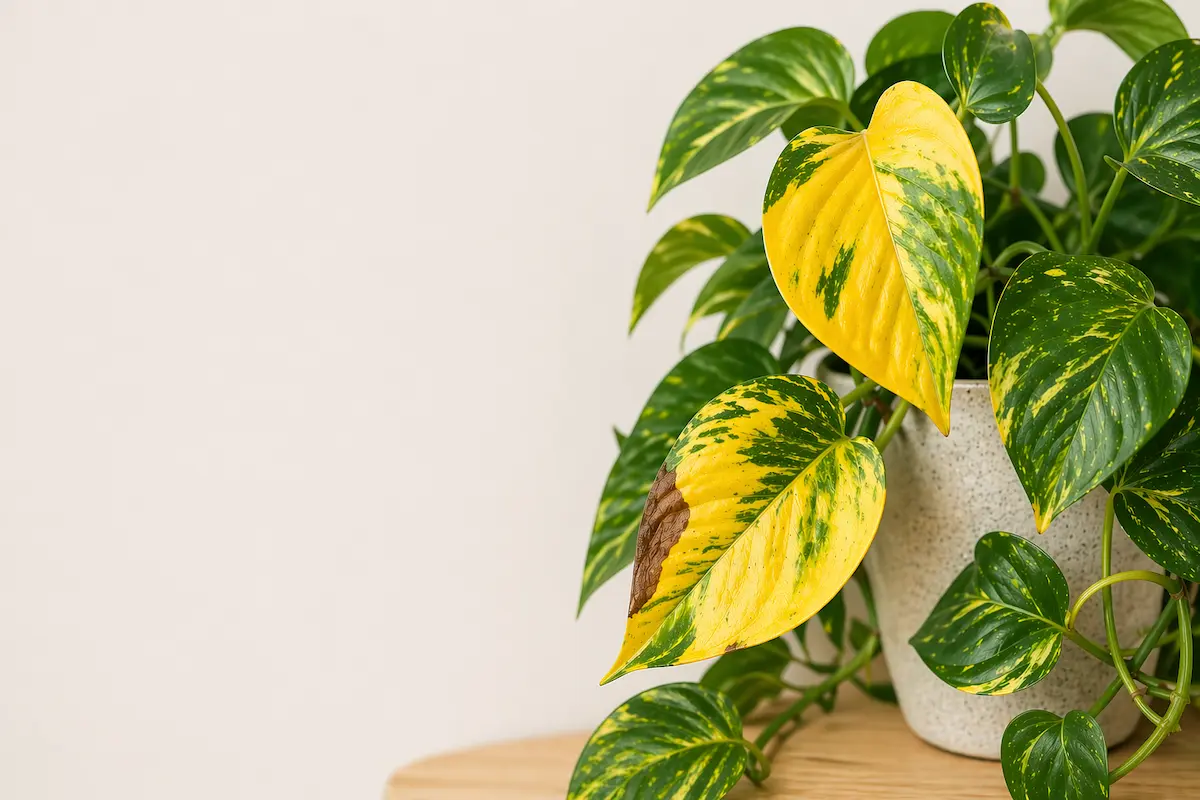
Pothos are supposed to be unkillable. And yet. Yellow leaves are almost never random, each cause produces a specific pattern. Match the pattern, fix the problem. Here's every cause, in order of how often it actually happens.
| Symptom | Most likely cause | Quick fix |
|---|---|---|
| Yellow leaves + wet soil | Overwatering | Let dry completely, check drainage |
| Yellow leaves + leggy stems | Low light | Move closer to a window |
| Yellow + brown edges | Chemical buildup in water | Switch to filtered water |
| Uniform yellowing, older leaves first | Nutrient deficiency | Fertilize monthly |
| Yellowing + roots coming out the pot | Root bound | Repot to a bigger container |
| Sudden yellowing after cold snap | Temperature stress | Move away from drafts |
Overwatering (Start Here)
This is the cause behind most yellow pothos. Not dramatic flooding, just soil that never fully dries between waterings.
When roots sit in wet soil too long, they rot. Rotting roots can't absorb nutrients. No nutrients means no chlorophyll. No chlorophyll means yellow leaves. The damage looks gradual because it is.
Push your finger two inches into the soil. If it's still damp, don't water, wait until it's actually dry. Pothos don't want a schedule. They want dry soil before the next drink.
If the soil is soggy and the lowest leaves are yellow and soft, you likely already have root rot. Pull the plant out, cut off any black or mushy roots with clean scissors, and repot in fresh soil with drainage holes. A moisture meter removes all the guesswork — worth it if you've already lost a plant this way.
Low Light
Pothos tolerates low light. It doesn't thrive in it.
There's a difference between "won't die" and "stays green." Below a certain threshold, the plant can't photosynthesize efficiently and leaves start losing color. Unlike overwatering, low-light yellowing spreads evenly across the plant rather than starting at the bottom.
Move it within two meters of a window. Not behind furniture — within actual reach of natural light. If your space genuinely doesn't get enough sun, a grow light running 12 hours a day solves this completely.
Fluoride or Chlorine in Tap Water
Most city tap water contains fluoride and chlorine. Pothos is sensitive to both over time, especially fluoride.
The pattern is pretty distinctive: yellowing that starts at the edges and tips, then turns brown, while the center of the leaf stays green. If that matches what you're seeing, this is your cause.
Switch to filtered water or let tap water sit out overnight before using it. The chlorine dissipates on its own. Simple fix, easy to miss.
Nutrient Deficiency
Pothos aren't heavy feeders, but they're not zero-maintenance either.
After six months in the same soil without fertilizer, most of the available nitrogen is gone. Nitrogen is what keeps leaves green. The yellowing starts from the oldest leaves at the base and moves up slowly over weeks.
Feed with a balanced liquid fertilizer once a month during spring and summer. That's it, over-fertilizing causes salt buildup in the soil, which creates its own problems.
Root Bound
A plant that's outgrown its pot can't function properly. The roots compress, circle the container, and eventually stop absorbing water and nutrients efficiently.
Pull the plant out of its pot. If you see a dense mass of roots with barely any soil visible, it needs more space. Go up one pot size, not two or three. Too much extra soil holds moisture the roots can't reach, which sends you straight back to overwatering problems.
Temperature Stress or Cold Drafts
Pothos does well between 15°C and 30°C. Below that it slows down. Below 10°C it drops leaves fast.
The less obvious version: a plant sitting close to a window in winter, or directly under an air conditioning vent. The room temperature might read fine, but the air hitting the leaves is significantly colder. Move it away from direct drafts and check whether new growth comes in green.
What To Do Right Now
- Push your finger two inches into the soil — if it's wet, don't water until it's actually dry
- Count the real hours of light the plant gets — less than two hours of indirect light isn't enough
- Look at where the yellowing starts — bottom leaves first means overwatering, edge browning means water quality, even spread means light
- Check the drainage holes — roots coming out means it's time to repot, regardless of anything else
// Newsletter
New plant problem? We'll email you the fix.
No spam. One email when we publish something useful.
No spam. Unsubscribe any time.