 PlantProblem
How to Save an Overwatered ZZ Plant (Step by Step)
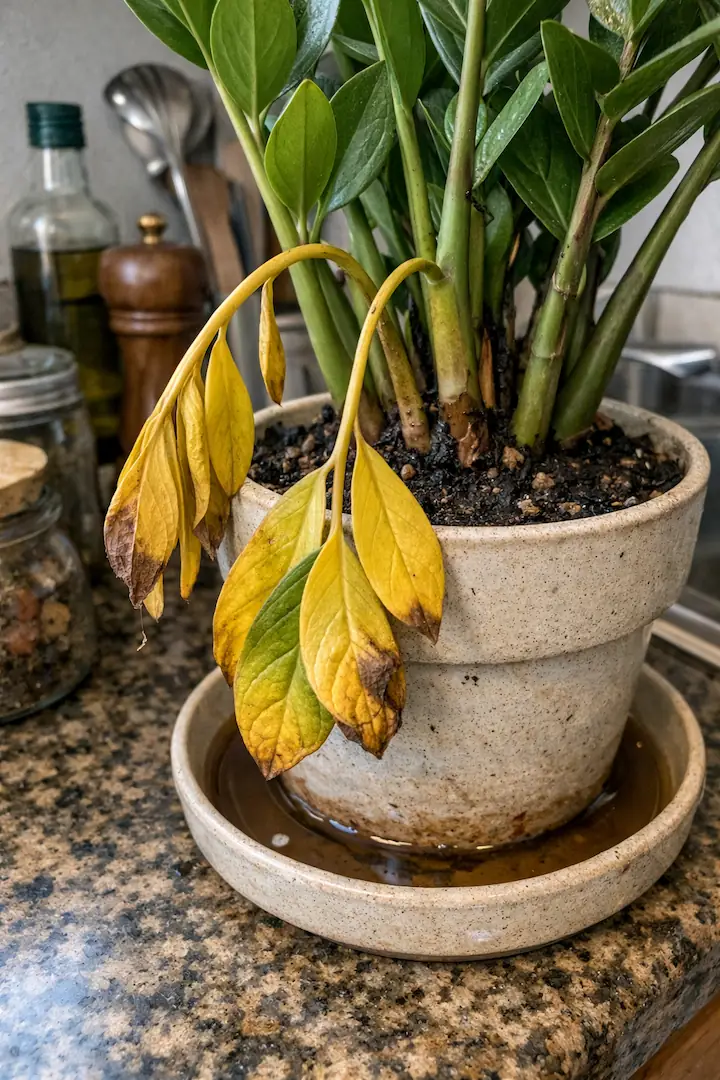
An overwatered ZZ plant is not a dead ZZ plant. But the gap between those two things closes faster than with almost any other houseplant, because of what's rotting.
Standard roots rot slowly. ZZ rhizomes — the thick storage organs that make this plant so drought-tolerant — rot fast once the process starts. You have days, not weeks.
| What you're seeing | What it tells you |
|---|---|
| Soil wet, leaves just starting to yellow | Early stage, high chance of full recovery |
| Multiple yellow leaves, stems still firm | Mid stage, act today |
| Stems soft near the base, leaves falling | Advanced, rhizomes likely damaged |
| Black mushy stems, plant collapsing | Severe, save what rhizomes remain |
| Soil wet but no visible symptoms yet | Caught early, stop watering immediately |
| Plant just repotted into wet soil, drooping | Transplant stress plus overwatering |
Step 1 — Stop Watering and Assess
Do not add any more water. Not a little. Not "just to check."
Remove the plant from its pot completely. Lay newspaper or a trash bag down and tip the root ball out. You need to see what you're working with before deciding anything else.
Healthy ZZ rhizomes are firm, pale tan or off-white, and solid when you press them. Compromised rhizomes are darker, softer, and give slightly under pressure. Rotting rhizomes are black or dark brown, mushy, and may smell like wet decay.
Your recovery plan depends on what percentage of the rhizomes are still healthy. More than half healthy means full recovery is likely. Less than a quarter healthy means you're saving what you can and starting mostly fresh.
Step 2 — Remove Everything Damaged
Use clean scissors or pruning shears. Wipe the blades with rubbing alcohol before starting.
Cut away every rhizome that is mushy, dark, or soft. Cut back to firm tissue. If a rhizome is partially damaged, cut past the damaged section until you reach solid material. Remove any roots attached to rotted rhizomes. Remove any stems whose bases are soft, even if the leaves still look green — a stem without a functioning rhizome will not recover.
This step feels aggressive. It is necessary. Leaving any rotting material in contact with healthy tissue continues the spread after you repot.
Let the cut surfaces air dry for two hours minimum before doing anything else. Exposed cuts on rhizomes are vulnerable to further infection if planted immediately while still wet.
Step 3 — Treat the Remaining Roots
Dust the cut surfaces and remaining healthy roots lightly with cinnamon powder or a powdered fungicide. Both act as natural antifungals and help seal the cuts against reinfection.
This step is optional if the rot was caught very early and the healthy rhizomes look completely clean. It becomes important if you removed significant damaged material and the cuts are large.
Step 4 — Repot in the Right Mix
Do not reuse the old soil. The fungal or bacterial agents that caused the rot are in that soil and will continue working on the new roots.
Mix standard potting soil with perlite at roughly a 60/40 ratio. The mix should feel loose and drain immediately when you pour water through it. ZZ plants in their natural habitat grow in rocky, fast-draining soil with very low organic matter. The standard potting mix most people use holds far more moisture than a ZZ rhizome tolerates over the long term.
Choose a pot that is only slightly larger than the remaining root ball after your cuts. A pot with drainage holes is non-negotiable at this stage. A A terracotta pot is the better choice here over plastic because terracotta wicks moisture from the soil through the walls, speeding up drying between waterings.
Plant the rhizomes at the same depth they were before, cover with the dry mix, and firm gently.
Step 5 — The First 30 Days
Do not water for ten days after repotting.
This is the hardest part. The plant looks stressed, the soil looks dry, the instinct is to water. Resist it. The rhizomes need to recover in dry conditions. New root growth happens in response to dry soil as the plant searches for moisture. Watering immediately floods roots that are not yet ready to process it.
After ten days, water lightly once. Let the soil dry completely again before the next watering. Use a moisture meter at the bottom of the pot rather than testing the surface — the rhizomes sit deep and the soil at root level dries much more slowly than the top few centimeters.
Yellow leaves that were already yellow before the repot will continue yellowing and drop. That is normal. Watch the stems. If they remain firm and no new yellowing appears on previously healthy leaves after two weeks, the recovery is working.
What To Do Right Now
- Take the plant out of its pot before reading the rest of this article. You need to see the rhizomes directly
- Cut away anything soft or dark without hesitation. Leaving it prolongs the problem
- Let the cuts air dry for two full hours before repotting. Set a timer
- Use fresh soil with added perlite, not the original mix
- Do not water for ten days after repotting regardless of how dry the soil looks or feels
Keep reading
// Newsletter
New plant problem? We'll email you the fix.
No spam. One email when we publish something useful.
No spam. Unsubscribe any time.