 PlantProblem
ZZ Plant Yellow Leaves: Overwatered or Just Dramatic?
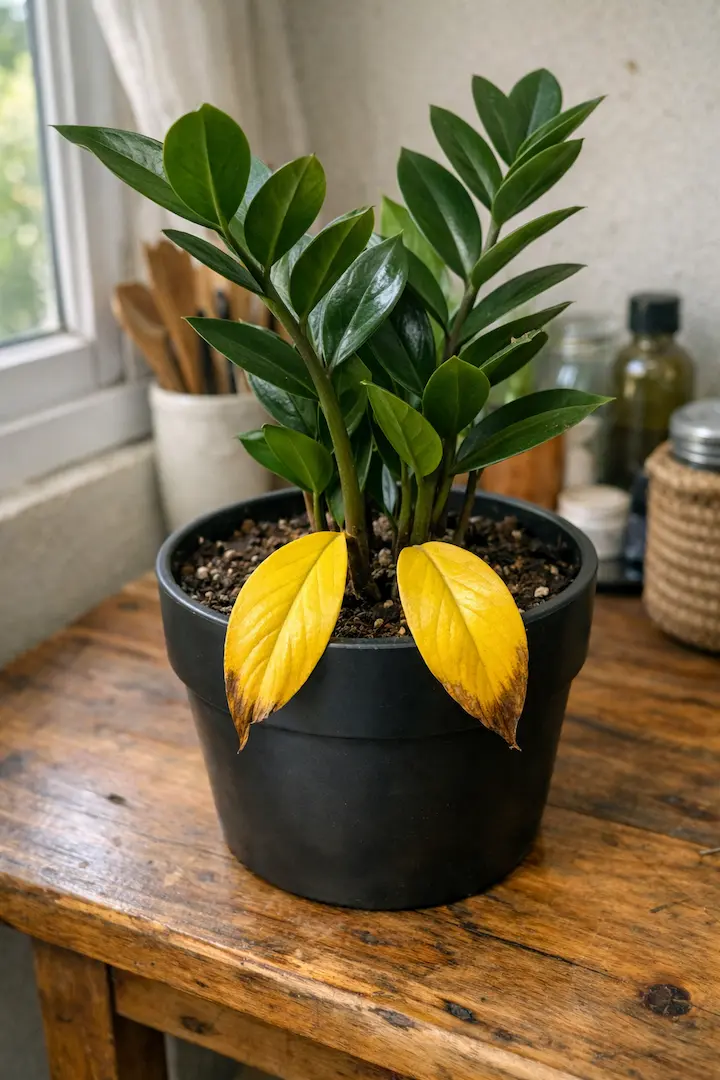
ZZ plants are supposed to be impossible to kill. That's mostly true. But "mostly" is doing a lot of work in that sentence.
When a ZZ shows yellow leaves, it's communicating something specific. The plant doesn't complain often. When it does, it means it.
| What you're seeing | Most likely reason |
|---|---|
| One or two yellow leaves, rest of plant healthy | Natural aging, nothing wrong |
| Multiple leaves yellowing at once, soil wet | Overwatering, check roots immediately |
| Yellow leaves plus soft or mushy stems at base | Root rot, act today |
| Pale yellowing across all leaves evenly | Not enough light |
| Yellow leaves after repotting | Transplant stress, usually resolves |
| New leaves coming in yellow | Nutrient deficiency or root damage |
Overwatering
This is the cause in the majority of cases, and it's worth understanding why ZZ plants are so vulnerable to it specifically.
ZZ plants store water in their rhizomes — the thick potato-like structures at the base of each stem underground. Those rhizomes are the reason ZZ plants survive drought so well. They're also the reason overwatering is so damaging. Rhizomes sitting in wet soil for extended periods rot faster than standard roots. By the time the leaves show yellow, the rhizome damage is already significant.
Press the soil. If it's still wet from the last watering, that's the answer. ZZ plants in most homes need water every two to three weeks in summer and every four to six weeks in winter. Those numbers feel wrong to people used to other houseplants. They're correct.
Let the soil dry completely before watering again. Not just the top two inches. The entire pot. A moisture meter inserted to the bottom of the pot is the most reliable way to check this because the rhizomes sit deep and the surface can be dry while the bottom is still wet.
Root and Rhizome Rot
If multiple leaves are yellowing quickly and the stems feel soft near the base, this has moved past overwatering into rot.
Pull the plant out of its pot. Healthy rhizomes are firm and light-colored. Rotting rhizomes are dark, mushy, and may smell. Cut off everything that isn't firm with clean scissors. Let the healthy portions air dry for two hours, then repot in fresh dry soil in a pot with drainage holes.
A well-draining potting mix with added perlite gives the rhizomes the air they need between waterings. Standard potting mix retains too much moisture for a plant that stores its own water supply internally.
Do not water immediately after repotting a plant you just treated for rot. Wait ten days. The roots need to recover in dry conditions before being asked to process water again.
Natural Aging
One yellow leaf every few weeks on an otherwise healthy plant is not a problem.
ZZ plants shed their oldest leaves as they produce new growth. Each stem grows from the base, ages over one to two years, and eventually yellows and dies back. This is the plant's normal cycle. The yellowing is gradual, the leaf stays firm rather than going soft, and the rest of the plant looks fine.
The way to tell this from overwatering: one leaf at a time over weeks, the soil is appropriately dry between waterings, and new stems are emerging from the soil. Remove the yellow leaf at the base once it's fully yellow and move on.
Not Enough Light
ZZ plants tolerate low light. Below a certain threshold they start showing it in the leaves.
The yellowing from insufficient light is different from overwatering yellowing. It's pale and even across the whole leaf rather than concentrated or patchy. It appears on multiple leaves gradually rather than suddenly. And it happens alongside slowed or stopped growth.
ZZ plants don't need direct sun. They do need more than a dark corner three meters from any window. Moving the plant to within one and a half meters of a window that receives indirect light for most of the day usually resolves this within six to eight weeks as new growth comes in healthy.
What To Do Right Now
- Press the soil to the bottom of the pot before doing anything else. If it's wet, stop watering and let it dry completely regardless of how long that takes
- Pull the plant out if multiple leaves are yellowing fast or the stems feel soft near the base. Check the rhizomes directly rather than guessing from the surface
- Count the yellow leaves. One at a time over weeks is aging. Three or more at once is a watering problem
- Move the plant closer to a window if the yellowing is pale, even, and accompanied by no new growth
Keep reading
// Newsletter
New plant problem? We'll email you the fix.
No spam. One email when we publish something useful.
No spam. Unsubscribe any time.