 PlantProblem
Peace Lily Drooping: Is It Thirsty or Dying?
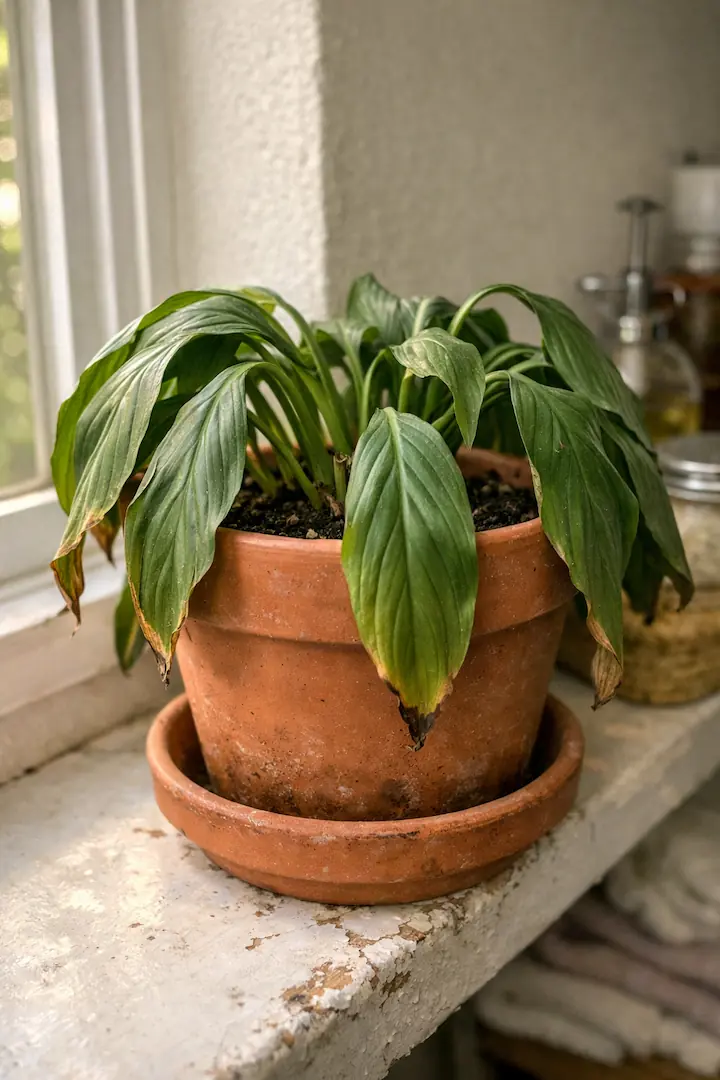
A drooping peace lily is one of the most misleading sights in houseplant care.
The plant looks like it's dying of thirst. Sometimes it is. Sometimes it's drowning. The fix for one makes the other fatal. Two minutes of checking tells you which situation you're in.
| What you're seeing | Most likely reason |
|---|---|
| Drooping, soil bone dry, pot feels light | Underwatering, water immediately |
| Drooping, soil wet or damp, pot feels heavy | Overwatering, stop completely |
| Drooping after watering, still drooping next day | Root damage, check roots |
| Drooping only in afternoon, perks up by morning | Normal heat response, nothing wrong |
| Drooping plus yellow leaves, wet soil | Root rot, act today |
| Drooping after repotting | Transplant stress, give it a week |
Check the Soil Before Doing Anything Else
Lift the pot.
A pot that feels light and the soil pulls away from the edges is underwatered. Water thoroughly until it drains from the bottom and the plant will recover within two to four hours. Peace lilies are dramatic about thirst but they bounce back fast once they get water.
A pot that feels heavy and the soil is still damp from the last watering is a different problem entirely. Adding more water to a drooping peace lily with wet soil accelerates whatever is causing the drooping. Put the pot down and read the next section.
Underwatering
This is the cause most people expect and it's correct about half the time.
Peace lilies lose water through their leaves faster than most houseplants because of their large, thin leaf surface. In a warm room in summer they can go from adequately watered to visibly drooping in four to five days. The drooping is the plant closing its stomata and reducing leaf pressure to conserve whatever moisture remains.
Water completely until it drains from the bottom. Do not mist the leaves as a substitute — it evaporates in minutes and does nothing for the roots. If the soil has become hydrophobic from drying out completely, it will repel water at first. Pour slowly and wait for it to absorb. A second pass five minutes after the first ensures the entire root ball is saturated.
The plant should recover visibly within two hours. Full recovery by the next morning. If it doesn't perk up after watering and the soil is now wet, the roots have a problem beyond simple thirst.
Overwatering
A peace lily with wet soil that is drooping has root stress.
Roots sitting in soggy soil lose the ability to transport water upward efficiently. The leaves droop not because there's no water available but because the roots can't deliver it. Watering more makes this worse. The drooping looks identical to thirst, which is why so many people kill peace lilies by watering them when they're already overwatered.
Stop watering completely. If the pot has no drainage hole, that is the first thing to fix. Move the plant to a spot with slightly more airflow to help the soil dry faster. Check the soil every two days and wait until the top half is dry before watering again.
If the drooping continues for more than three days after stopping water, pull the plant out and check the roots.
Root Rot
Roots that are brown, black, or mushy cannot deliver water regardless of how much is in the soil.
Healthy peace lily roots are white or light tan and firm. Anything dark and soft needs to be removed. Cut back to healthy tissue with clean scissors, let the roots air dry for an hour, and repot in fresh well-draining soil in a pot with drainage. A moisture meter used before every future watering prevents this from recurring. Peace lilies want the top half of the soil to dry out between waterings, not just the surface.
Recovery after root rot treatment takes two to three weeks. The plant may lose a few more leaves during that time. New growth appearing from the center is the sign that the roots have reestablished.
Afternoon Drooping
Peace lilies droop in high heat even when perfectly watered.
A plant near a south or west-facing window in summer may look wilted by midafternoon and fully recovered by the following morning. This is the plant's heat response, not a watering problem. The roots are fine, the soil moisture is appropriate, and the plant is simply managing its temperature by reducing leaf pressure during the hottest part of the day.
If the plant is fully recovered each morning, nothing is wrong. Move it slightly further from the window if the afternoon drooping bothers you, or accept it as normal seasonal behavior.
What To Do Right Now
- Lift the pot before reaching for the watering can. Heavy means wet, light means dry, and the fix is completely different for each
- If the soil is dry, water completely and wait two hours before worrying further
- If the soil is wet and the plant is drooping, put the watering can away and check the roots if it hasn't improved in three days
- If the plant droops only in the afternoon and looks fine every morning, leave it alone
Keep reading
// Newsletter
New plant problem? We'll email you the fix.
No spam. One email when we publish something useful.
No spam. Unsubscribe any time.